

In the process of extending your home, knowing where to spend or save when planning an extension is key to managing your budget effectively. This guide offers insights into strategic investments that pay off and practical ways to cut costs while upholding your extension’s value.

When it comes to planning an extension on a tight budget, the secret lies in effective allocation of funds, but where exactly should you be spending to get the most value for money? The answer lies in three key areas: investing in expertise, choosing quality materials, and securing proper permissions.
So, how do you do it? Here are three steps to help you balance your extension budget effectively and reduce costs:
Following these steps will help you make the most of your budget and achieve your desired extension while keeping costs under control.
Investing in expertise is crucial for any extension project. Hiring qualified professionals at the beginning of your project ensures:
Remember, architects are invaluable in the pre-planning design stage for determining where to allocate funds for maximum impact while keeping the overall costs in check. Investing in architects with experience in designing low-cost projects will guide you to beautiful home extensions, minimise costly errors, and keep costs under control. This could be your secret weapon for saving money!
Choosing quality materials for your extension isn’t just about aesthetics; it’s a long-term investment. While the initial costs may be higher, quality, durable materials ensure longer-term financial savings by minimising future repairs or replacements.
Materials like clay, concrete, or slate roof tiles offer durability against harsh weather and fire, significantly extending the lifetime of an extension. However, be cautious of using inferior materials to cut initial costs. It could lead to frequent repairs and higher overall expenses, negating the initial savings.
So, invest wisely in your materials to ensure a cost-effective way to spend money on your extension project.
The cost of securing proper permissions is an essential part of your extension budget. Many extensions can be done under permitted development rights, avoiding the need for formal planning permission, provided they adhere to specific rules. However, the costs may vary depending on your location.
For cost advice, please visit the guidance fees for planning applications page on the official government website. We also have a page for advice on whether or not you need planning permission.
It’s also important to note that ensuring an extension complies with Building Regulations for structural integrity, insulation, and safety is crucial, and final inspections by local authorities or certified inspectors confirm legal completion of the project. Thus, while securing proper permissions might seem tedious, it is a crucial investment to avoid potential legal issues and fines.
One of the easiest ways to save money is by choosing standard-sized, off-the-shelf products instead of custom-made items. Using standard sizes for doors and windows ensures greater savings and the ease of sourcing off-the-shelf products at a fixed price.
Selecting off-the-shelf joinery over bespoke options can lead to significant cost savings due to reduced manufacturing and procurement times. And guess what? It’s often more cost-effective to modify off-the-shelf products to fit a design rather than investing in expensive, bespoke items.
So, next time you’re shopping for your extension project, think off the shelf!
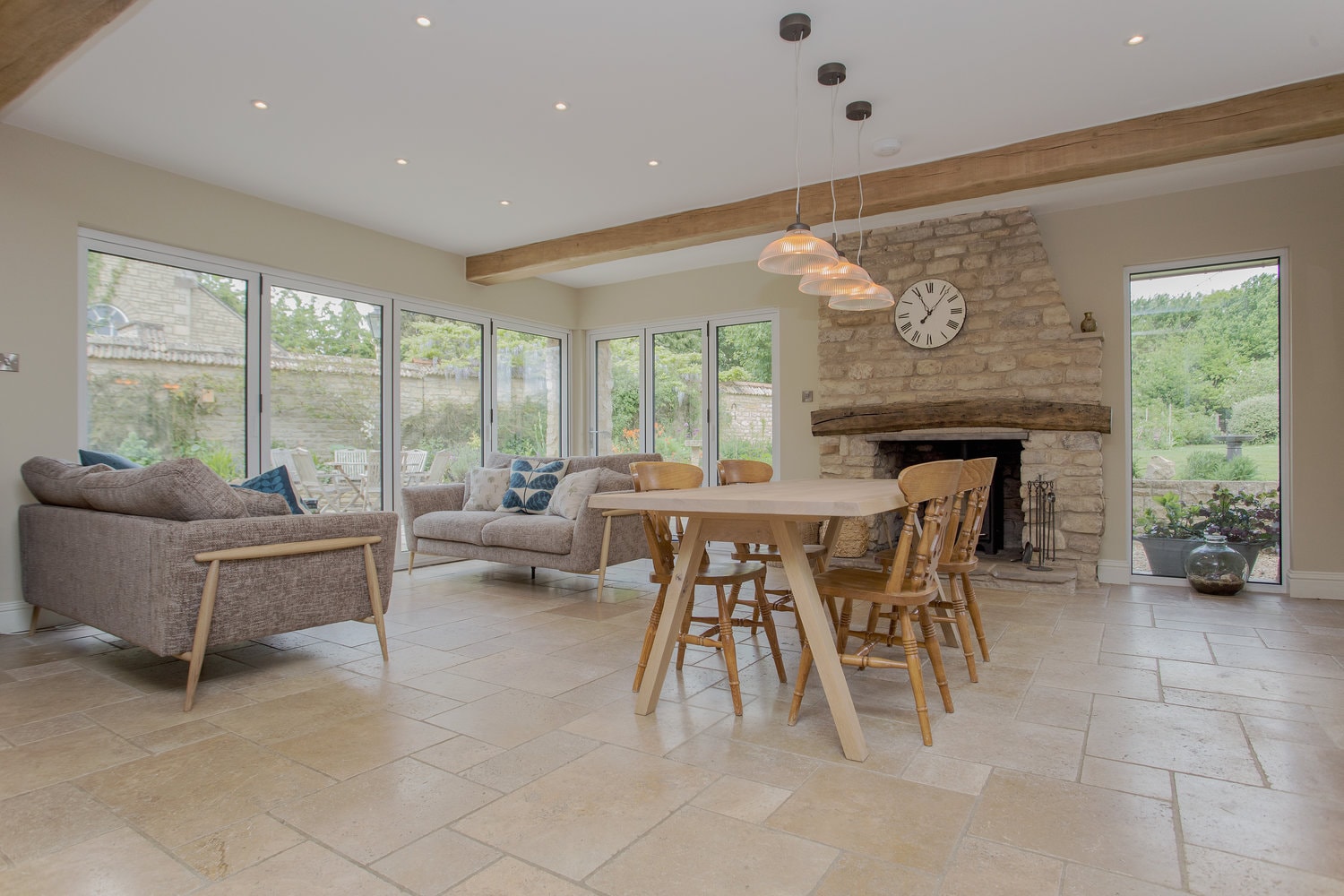
Reusing and recycling materials can significantly reduce costs and contribute to a more sustainable construction process. Some examples of existing materials that can be revitalised and reused include:
By opting to reuse materials in construction projects, we can make a positive impact on the environment and reduce waste.
Plus, you can source a variety of recycled building materials, like used bricks, from reclamation yards, not only adding character to the new extension but also saving some bucks. So, before you rush to buy new materials, consider what you can reuse or recycle from your existing property.
Design decisions can significantly impact the cost of your extension. Opting for simple and straightforward designs can save on construction costs. Some design choices to consider include:
These design choices can help save on structural costs, especially as the size of the new structure increases.
Budget-friendly building materials and standard-size off-the-shelf doors and windows make projects like a two-storey extension more affordable. So, be smart with your design choices. After all, a well-designed extension doesn’t have to burn a hole in your pocket!
Timing is crucial when it comes to extension projects. Seasonal demand can cause price fluctuations in construction materials and labour, potentially affecting overall construction costs significantly. For instance, building costs can be more favourable during off-peak seasons due to lower rates from construction companies.
Contractors may be more inclined to negotiate on price during slower seasons, providing cost-saving opportunities. So, if you’re flexible with your timeline, try to plan your project during off-peak seasons to get the best deals and avoid overpaying during high-demand periods.
Permitted Development Rights can be a game-changer for extension projects. These rights allow property owners to undertake various improvements, including single-storey extensions and loft conversions, without requiring full planning permission, subject to conditions.
Utilising Permitted Development Rights can help homeowners save money by avoiding the costs associated with a full planning application, such as application fees, and can add significant value to their property. Remember, even under Permitted Development, it is crucial to comply with other regulations, including building codes, to ensure safety and energy efficiency.
When planning an extension, you may face the decision to relocate or retain essential services like plumbing and electrical systems. Retaining the current positions of pipes and cabling during a home extension project can result in significant cost savings.
For instance, careful planning of the layout to place new kitchen and bathroom fixtures in close proximity to existing services avoids unnecessary spending on relocating these services. So, before you decide to move that toilet or sink, consider the financial implications!

The foundation of your extension doesn’t have to be a financial burden. By choosing simple, cost-effective designs, you can save on foundation costs. Opt for simple structures such as square or rectangular layouts, minimising structural alterations, and opting for single-storey designs when possible.
Also, designing an extension to evade the necessity for specialist foundations is a crucial strategy for cost reduction, preventing potentially expensive and unforeseen expenditures.
Remember, careful positioning of the extension away from:
Utilising other buried services can lead to significant cost savings by eliminating complex groundwork.

Choosing the right internal finishes can significantly impact your extension budget. For instance, flooring choices significantly affect project costs ranging from affordable vinyl or laminate at £15 per square metre to luxe hardwood or stone exceeding £100 per square metre.
Finalising flooring, tiling, and fixture decisions early aids in maintaining budget discipline. Pairing a few select luxury items with less expensive solutions can create an overall high-end feel without excessive spending. So, spend wisely on your internal finishes and create an amazing living space without overspending.
Investing in the right external elements can enhance the visual appeal and longevity of your extension. Cladding, for instance, can enhance the visual appeal and ensure the longevity of the structure. Modern cladding options such as metal and pre-finished fibre cement are becoming popular for their minimal maintenance and durability, offering a contemporary edge to extensions.
Traditional materials like vertical tiling and flint, on the other hand, are not only aesthetically pleasing but also pay homage to local architectural styles, adding a unique character to the extension.

Investing in energy-efficient features is a smart way to future-proof your extension. Features like cavity concrete blocks instead of regular bricks allow for the application of external wall insulation (EWI), which can lead to a potential reduction in heating bills by up to 40% despite its higher initial cost.
The installation of double-glazed windows, though they come with a higher initial investment, can lead to annual savings by improving thermal performance and reducing heat loss. Hence, investing in energy-efficient features, despite the higher initial cost, aligns with a strategy for achieving significant long-term utility bill savings.
To avoid hidden costs, it’s crucial to:
Also, keep an itemised running budget and an order of works to track the extension’s budget effectively. And don’t forget to include a contingency fund of approximately 20% for unforeseen expenses in your budget. Remember, careful and strategic budgeting can help you avoid hidden extras and stay on track financially with your extension budget.
Negotiating with contractors can be a tricky business, but with the right strategies, you can secure the best deals and maintain a transparent, cost-effective working relationship. Start by requesting a fully itemised quote from builders and triple checking the included elements to understand the cost of each project element for accurate budgeting and easier adjustments.
Maintaining open and transparent relations with the builder prevents costly changes and promotes adherence to budget constraints. So, don’t shy away from negotiations. After all, every penny saved is a penny earned!
Building an extension doesn’t have to drain your bank account. By allocating funds wisely, opting for quality materials, reusing and recycling, managing some aspects of the project yourself, and making smart design decisions, you can keep your extension costs under control.
Remember, timing is crucial, and so is understanding Permitted Development Rights. Invest wisely in internal and external elements, and don’t forget to future-proof your extension with energy-efficient investments. With careful planning and strategic decision-making, your dream extension is well within your reach!
The best way to afford extensions is to use your savings, as it eliminates the need to borrow money or risk any assets. Additionally, a home improvement loan is an option that offers flexible repayment and is unsecured.
The first thing to do when planning an extension is to conduct thorough research, including checking for necessary permissions and building regulations, and creating a budget and designs. It's important to ensure you have the necessary legal permissions and insurance before proceeding with the planning process.
The most expensive part of a house extension is usually the foundation work and structural alterations needed to support the new space, along with costs for labour and materials. Keep these in mind when planning your budget.
To reduce the cost of building your extension, you can start by planning ahead and trimming the budget. Keep the design simple, use affordable materials, and try to avoid complicated groundwork and high labour costs. By doing so, you can significantly cut down on the overall expenses.
Yes, you can save by managing tasks yourself, but it's important to hire professionals for skilled tasks to avoid complications.
For questions about your own extension project, get in touch with us today for a free no-obligation quote.
For more detailed information about our services or to request a free quote, call us today on 01733 663222
JM Building Developments LLP
Allia Future Business Centre
London Road
Peterborough
PE2 8AN